In petrochemical and refinery sectors, gas leaks are silent threats. A high-precision Gas Detector system is a mandatory safety engineering requirement to prevent catastrophic incidents effectively.
Types of Gas Detectors
- Portable Gas Detector: Essential PPE for workers in confined spaces, available in single or multi-gas configurations.
- Fixed Gas Detector: 24/7 continuous monitoring integrated via 4-20 mA or Modbus to DCS/SCADA for automated Emergency Shutdown (ESD).
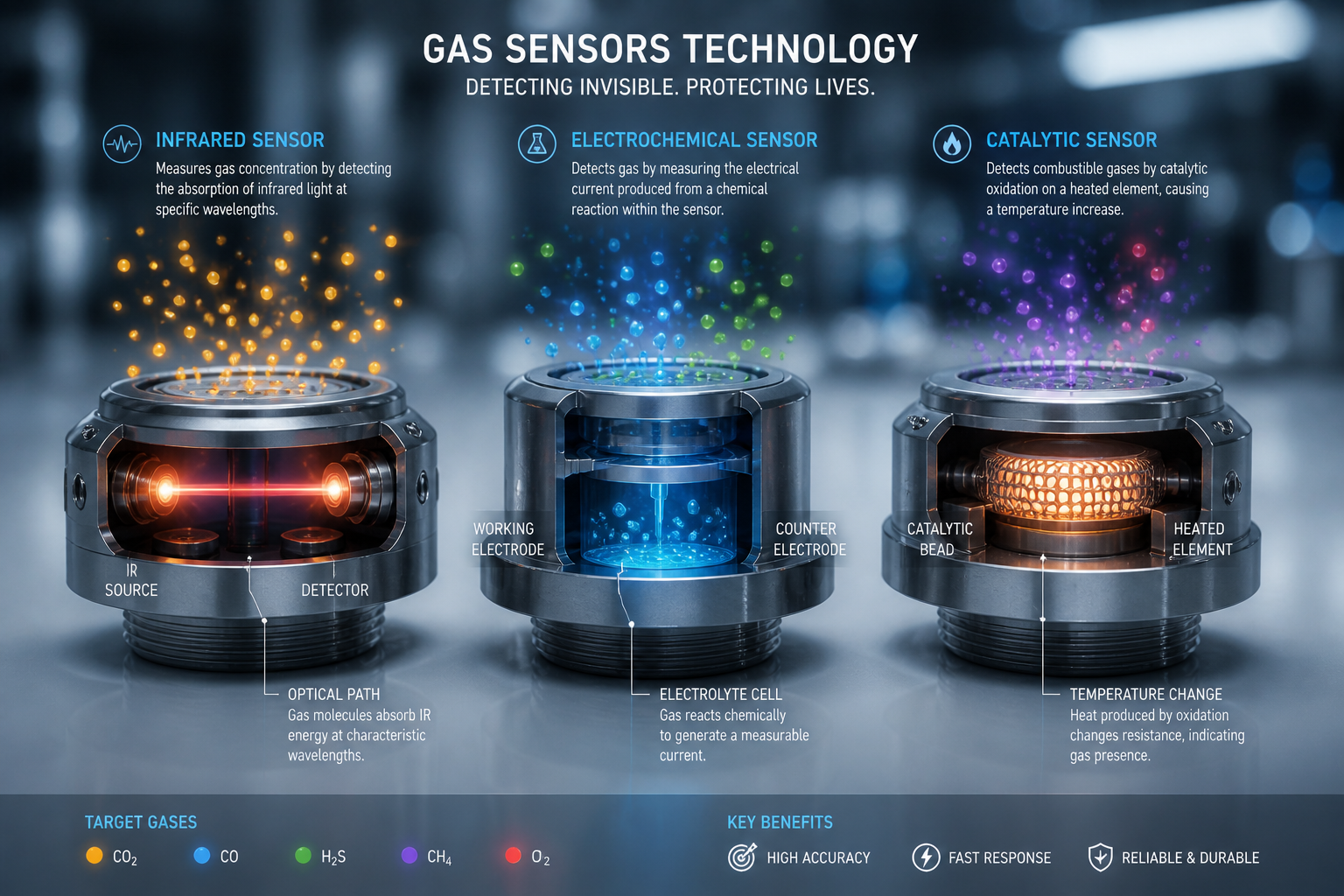
Sensor Technology: The Heart of Precision
- Catalytic Bead: For combustible gases (LEL); cost-effective but susceptible to poisoning.
- Infrared (IR): For hydrocarbons; poison-resistant and requires less frequent calibration.
- Electrochemical: High sensitivity for toxic gases, measuring in ppm levels.
- PID (Photoionization): Specifically for detecting VOCs in industrial hygiene applications.
Safety Standards & Maintenance
Devices in hazardous areas must be ATEX or IECEx certified. Regular maintenance is crucial:
- Bump Test: Daily functional check of sensors and alarms before use.
- Calibration: Full adjustment using standard gases every 6 months to correct sensor drift.
Conclusion
Choosing the right Gas Detector and maintaining it properly ensures rapid response times, protecting both personnel and industrial infrastructure.


