How to Choose the Right CEMS for Your Plant: Selection & TCO Guide
How to Choose the Right CEMS for Your Plant: A Buyer's Guide by Pollutant, Stack Conditions, and TCO
When the time comes to invest in an emission monitoring system, the question plant leaders ask most often is, "Which system should we choose?" The honest answer is that there is no single off-the-shelf system that fits every plant. CEMS is a system that must be engineered to match the pollutants you actually emit, the physical conditions of your stack, and your lifetime budget. This buyer's guide will help you decide systematically. To review the fundamental building blocks first, read What is CEMS and its 5 core components.
Step 1: Start with the Pollutants You Must Measure
The starting point is not priceit is the parameters the law requires you to measure, which depend on your process type and fuel. These typically include:
- Pollutant gases: SO2, NOx, CO, and in some cases HCl or VOCs
- Reference gases: O2 for normalizing readings, and CO2 in some processes
- Particulate matter (PM): This requires a dedicated dust monitor or opacity analyzer that works on a different principle from gas analyzers.
Defining the full parameter list early prevents you from buying more than you need or missing a legally required parameter. It also shapes every downstream decisionthe analyzer technology, the conditioning system, and even the size of the analyzer shelter. A factory burning natural gas has very different monitoring needs from one burning biomass or heavy fuel oil, and getting this list right with your environmental consultant before requesting quotes will save significant cost and rework later.
Step 2: Assess Your Stack Conditions
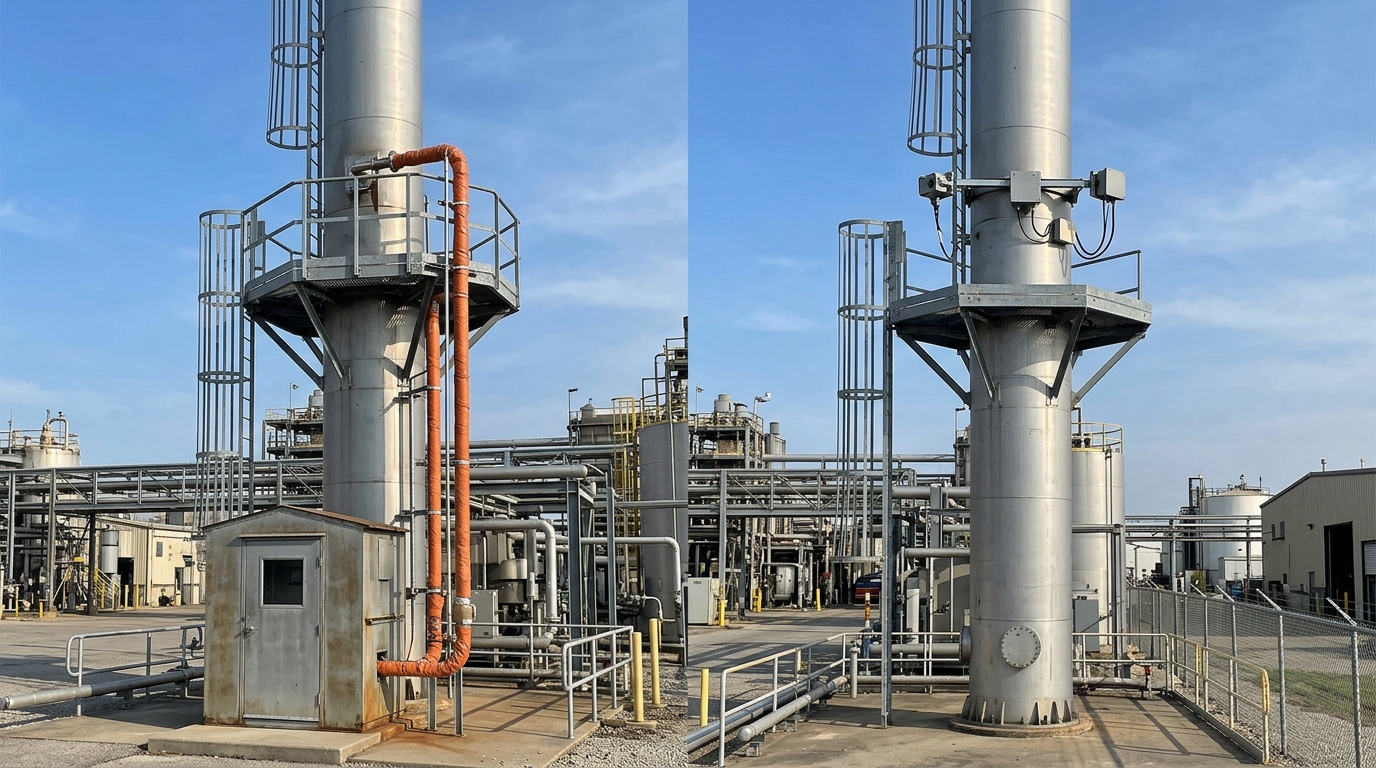
The physical conditions inside the stack directly influence the technology you choose. Survey the moisture level, gas temperature, dust load, corrosiveness, and where a sample probe can be installed according to good engineering practice. A stack with wet, dusty gas demands more complex sample conditioning than one with dry, clean gas. The survey should also confirm there is a safe, accessible platform for installation and future maintenance, adequate power, and a sampling location that meets the minimum distance from flow disturbances. Skipping this on-site assessment is a frequent source of project delays, because a system specified on paper may not physically fitor may not deliver representative samplesonce it reaches the real stack.
Step 3: Decide Extractive vs In-Situ for Your Plant
The MAY article introduced the basic differences, but for a real decision, use this guidance:
- Choose extractive when the gas is high in moisture or dust, when you need maximum accuracy, or when you must measure several parameters at once. The system conditions the gas before measurement, and the ground-level analyzer is easy to maintain.
- Choose in-situ when the gas is relatively clean and stable, when you need a real-time response without sampling delay, or when you want to reduce sample-line complexity. Opacity-based particulate measurement is usually in-situ.
Step 4: Think in Total Cost of Ownership (TCO)
A common mistake is comparing only the equipment price. The true cost is the Total Cost of Ownership over the system's life, which includes:
- Calibration gas and reference gases that must be replaced on a cycle
- Consumable spares such as filters, pumps, and gas cooler parts
- Maintenance service and periodic RATA costs
- Downtime and the risk of penalties if data is incomplete
A system with a lower purchase price but high maintenance demands can have a higher long-term TCO.
Step 5: Vendor Selection Criteria
The final factor, often overlooked, is the quality of the vendor. A CEMS will be with you for many years. Key criteria include responsive local vendor support, availability of spare parts and reference gases, experience with processes similar to yours, andmost importantlya proven record of passing certified RATA. Ask prospective vendors about their guaranteed response time for breakdowns, whether they hold spare analyzers locally, and how they handle the data-reporting integration with POMS. A vendor who only sells hardware and disappears after installation can leave you exposed during an audit, whereas a partner who supports the full lifecyclefrom commissioning through annual RATAprotects your compliance year after year. Request references from existing clients in your industry and, if possible, visit a site they maintain.
Conclusion
Choosing the right CEMS is about balancing pollutant types, stack conditions, technology, and lifetime cost. The cheapest investment today may not be the most cost-effective in the long run. ASE Thailand's engineering team can assess your plant's specific needs, from a stack survey to a proposal built on real TCO. If your facility faces gas-leak risk, consider a fixed Gas Detection System alongside your CEMS.


