Industrial Gas Detector Selection Guide: Technology & Standards
In the realm of heavy industry and manufacturing, safety is not merely an optionit is the foundation of sustainability. Some of the most lethal hazards are those that cannot be seen, smelled, or heard: Gas Leaks. Whether it is a combustible gas threatening an explosion or a toxic gas that can incapacitate a worker in minutes, a reliable detection system is non-negotiable.
This article serves as the Definitive Guide from ASE (Analytical Systems Engineering Thailand), providing deep insights into Gas Detectors, covering everything from core technologies and application-specific selection to global standards used by engineers for critical decision-making.
Introduction: Why Selecting the Right Gas Detector is More Critical Than You Think
Many perceive a gas detector as just another measurement instrument. In reality, it is a Life Safety System. Choosing the wrong type or installing a device in an sub-optimal location can lead to catastrophic failures, such as: 1. Explosions: Occurring when combustible gases reach their LEL (Lower Explosive Limit) and meet an ignition source. 2. Oxygen Deficiency: In confined spaces where other gases displace oxygen, leading to asphyxiation. 3. Acute Toxicity: Exposure to high concentrations of gases like H2S or CO.
Chapter 1: Types of Gas Detectors Choosing the Right Format
Gas detection systems are generally categorized by their installation method and operational scope:
1. Fixed Gas Detection Systems Permanently installed in high-risk zones, such as near storage tanks, pipelines, or control rooms. - Key Advantage: Provides 24/7 continuous monitoring, can be integrated into Fire & Gas (F&G) systems or PLC/DCS. - Ideal For: Oil refineries, power plants, chemical manufacturing facilities. - View Products: Fixed Gas Detector
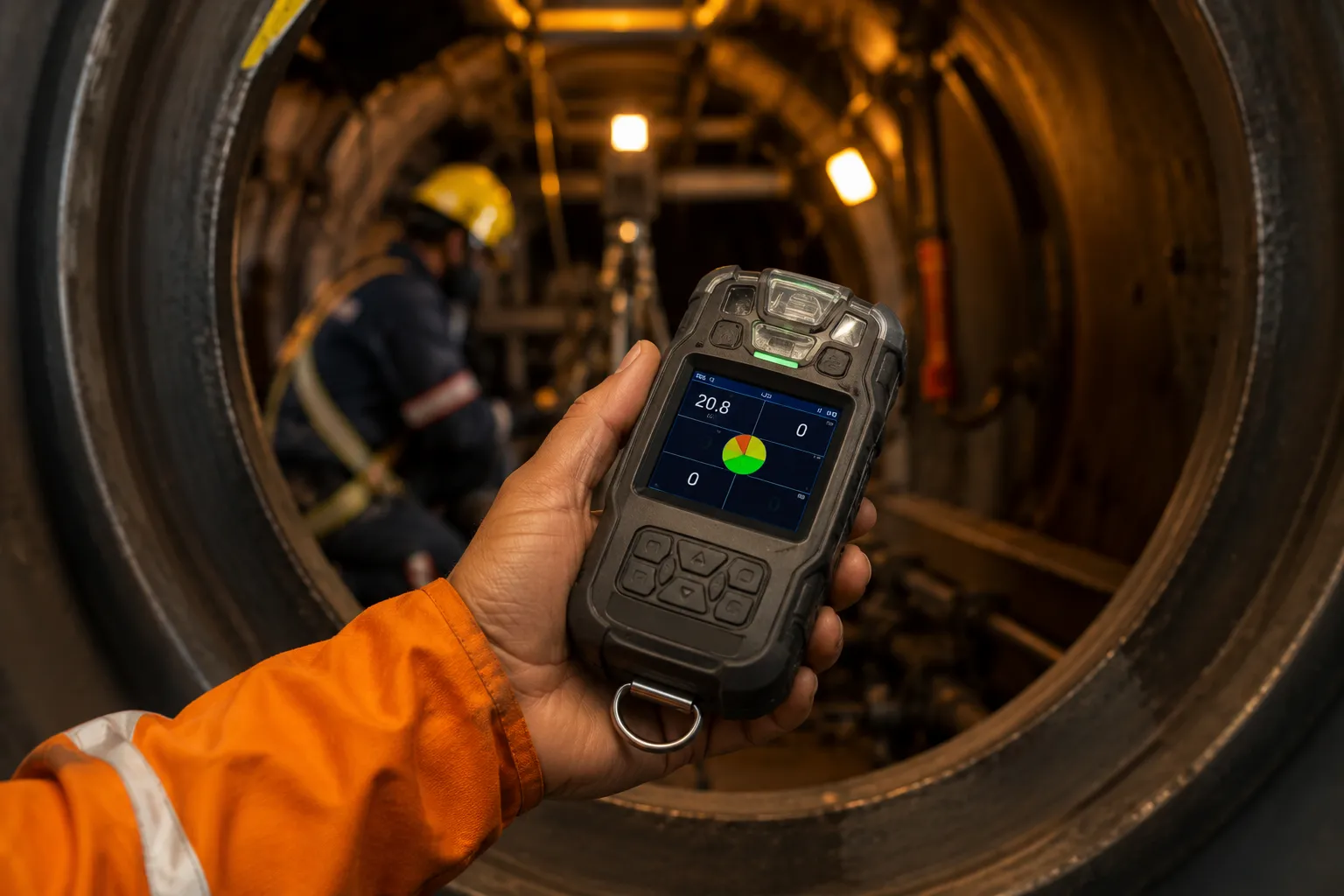
2. Portable Gas Detectors Personal protective equipment (PPE) that workers carry when entering potentially hazardous areas. - Single-gas vs Multi-gas: Portables range from single-gas monitors (e.g., O2 or H2S) to multi-gas units capable of detecting 4-5 gases simultaneously (e.g., LEL, O2, CO, H2S). - Ideal For: Confined space entry, maintenance work, and temporary inspections.
3. Ultrasonic Gas Leak Detectors (Acoustic Detection) A core specialty of ASE. These detectors do not wait for gas to reach a sensor. Instead, they "hear" the high-frequency ultrasound generated by a pressurized gas leak. - Key Advantage: Instant detection even in high-wind conditions that would disperse gas away from traditional sensors. - Ideal For: Offshore platforms, open-air pipelines, and compressor stations.
4. Open Path Gas Detectors Utilizes an IR or UV beam transmitted over long distances (up to 200 meters) to detect gas clouds passing through the beam. - Key Advantage: Covers vast areas with fewer devices, reducing overall system complexity. - Ideal For: Fence-line monitoring and large gas storage depots.
Chapter 2: Deep Dive into Sensor Technologies
The heart of any gas detector is its sensor. Understanding how they function is vital for accurate selection:
1. Electrochemical Sensors (Toxic Gases & Oxygen) Operates like a battery. When the target gas enters the sensor, a redox reaction occurs at the electrodes, generating a current proportional to the gas level. - Gases: CO, H2S, Cl2, NH3, O2. - Lifespan: Typically 2-3 years. - Read More: What is a Gas Sensor? Types & Principles
2. Catalytic Bead / Pellistor (Combustible LEL) Uses a heated wire coil to oxidize combustible gas on the sensor surface, measuring the resulting temperature rise. - Caution: Susceptible to "poisoning" from substances like silicones or lead, which can deactivate the catalyst.
3. Infrared (IR) / NDIR (Hydrocarbons & CO2) Measures gas based on IR light absorption. It does not require oxygen to function and is completely immune to chemical poisoning. - Gases: Methane, Propane, CO2.
4. Photoionization Detector (PID) (VOCs) Uses a high-energy UV lamp to ionize gas molecules. PIDs are extremely sensitive, capable of measuring trace concentrations in parts per billion (ppb). - Ideal For: Environmental monitoring and tracking hazardous industrial solvent leaks. - Related Tech: Gas Analysis via Gas Chromatography
Chapter 3: Selection by Application Tailoring the Solution
Different industrial environments present unique challenges. Here is how to select the right system for key sectors:
1. Oil, Gas, and Petrochemical Industry - Primary Risks: Flammable hydrocarbons (Methane, Propane) and toxic H2S. - Recommended Solution: A hybrid approach using Point IR Detectors for specific leak points, Open Path Detectors for fence-line security, and Ultrasonic Detectors for high-pressure process areas. - Related Solutions: CEMS Systems and Analyzer Cabinets
2. Wastewater and Water Treatment Plants - Primary Risks: Hydrogen Sulfide (H2S), Ammonia (NH3), Methane from decomposition, and Oxygen deficiency. - Recommended Solution: Multi-gas Portable Detectors for pit entry and Fixed Electrochemical Sensors in closed process rooms. - Further Reading: Understanding BOD and COD and Water Analyzer Categories
3. Food and Beverage Industry - Primary Risks: CO2 (from fermentation or carbonation), NH3 (large-scale refrigeration), and various refrigerant leaks. - Recommended Solution: NDIR CO2 Detectors in cold storage and Electrochemical NH3 Detectors in plant machinery rooms.
4. Mining Industry - Primary Risks: Methane (Firedamp), Carbon Monoxide from heavy machinery, and Oxygen depletion in deep shafts. - Recommended Solution: Ruggedized Portable Multi-gas Monitors and ventilation systems integrated with gas sensors.
Chapter 4: International Standards and Certifications
In industrial safety, compliance is the only measure of trust:
1. ATEX (European) and IECEx (Global) Certifies that the gas detector itself will not act as an ignition source in a hazardous atmosphere. - Zones 0, 1, and 2: Defined by the frequency and duration of the presence of explosive gases. - Read More: 5 Core Components of CEMS
2. OSHA and NIOSH (USA) Defines chemical exposure limits for workers (PEL, REL), including TWA (Time Weighted Average) over 8 hours.
3. SIL (Safety Integrity Level) A measure of the reliability and risk reduction provided by a safety system. Higher levels (e.g., SIL 3) indicate an extremely low probability of system failure.
Chapter 5: Installation and Maintenance Essentials
Placement Strategies: - Heavier-than-air gases (e.g., LEL, H2S): Install detectors close to the floor (30-60 cm). - Lighter-than-air gases (e.g., Methane, H2): Install near the ceiling or potential accumulation points. - Airflow: Always consider prevailing wind patterns in outdoor environments to ensure gas clouds reach the sensor.
Calibration and Testing: - Bump Test: A quick functional check to ensure sensors respond and alarms activate before daily use (for portables). - Full Calibration: Periodic adjustment using certified calibration gas every 3-6 months to counteract "Sensor Drift." - Efficiency Solutions: SWAS Systems
Chapter 6: Gas Detection Technology Comparison Table
| Technology | Best For | Advantages | Limitations |
|---|---|---|---|
| Electrochemical | Toxic gases, O2 | High accuracy, low power | Short lifespan, humidity sensitive |
| Catalytic Bead | Flammable (LEL) | Cost-effective, global std | Susceptible to poisoning |
| Infrared (IR) | Hydrocarbons, CO2 | Fail-to-safety, poison-res | Higher cost, cannot detect H2 |
| PID | VOCs, Trace solvents | High sensitivity (ppb) | Requires UV lamp maintenance |
| Ultrasonic | High-pressure leaks | Instant, wind-proof | No gas type/concentration data |
Chapter 7: Frequently Asked Questions (FAQ)
Q: Why is frequent calibration necessary? A: All gas sensors degrade over time due to environmental exposure. Calibration restores accuracy, ensuring the device provides 100% reliable data.
Q: Which is better: Fixed or Portable Gas Detectors? A: Neither is "better"; they are complementary. Fixed systems protect the facility and assets, while Portables protect individual personnel.
Q: How can ASE help design a Gas Detection system? A: Our engineering team has over 20 years of experience. We provide end-to-end services from Gas Mapping and brand selection (Emerson, Honeywell) to installation and lifecycle maintenance.
Conclusion
Selecting the right gas detector is an investment in the peace of mind and the long-term future of your business. ASE Thailand is ready to be your partner, providing cutting-edge technology and expert engineering to ensure your facility remains the safest environment possible.


