CEMS Data Reporting to DIW: POMS, DAS & Real-time Transmission
CEMS Data Reporting to the DIW: POMS, DAS, and Real-time Transmission
Many factories invest in expensive gas analyzers to measure accurately, yet forget that measurement is only half the mission. CEMS is a system designed to deliver datato let the government continuously see your emission status. If the data never reaches the Department of Industrial Works (DIW), or arrives incomplete, the hardware investment delivers no legal value. This article traces the data path from the stack to the government system. If you are not yet familiar with the system's components, read What is CEMS and its 5 core components first.
What POMS Is and How It Connects to CEMS
POMS (Pollution Online Monitoring System) is the DIW's central system for receiving emission data from factories nationwide online. The idea behind it is that, instead of officials conducting occasional site inspections, the government can see each factory's emissions in near real time through a single system. When a factory's CEMS connects to POMS, measured values are transmitted into the central database in the required format and frequency, giving both the factory and the regulator one auditable data set. This shared visibility changes the compliance dynamic: there is no longer a gap between what happens at the stack and what the regulator knows. For a well-run plant, that transparency is an assetit provides a continuous, defensible record that emissions stayed within limits, which is valuable during audits, permit renewals, and community relations.
The Role of the DAS in Preparing and Transmitting Data
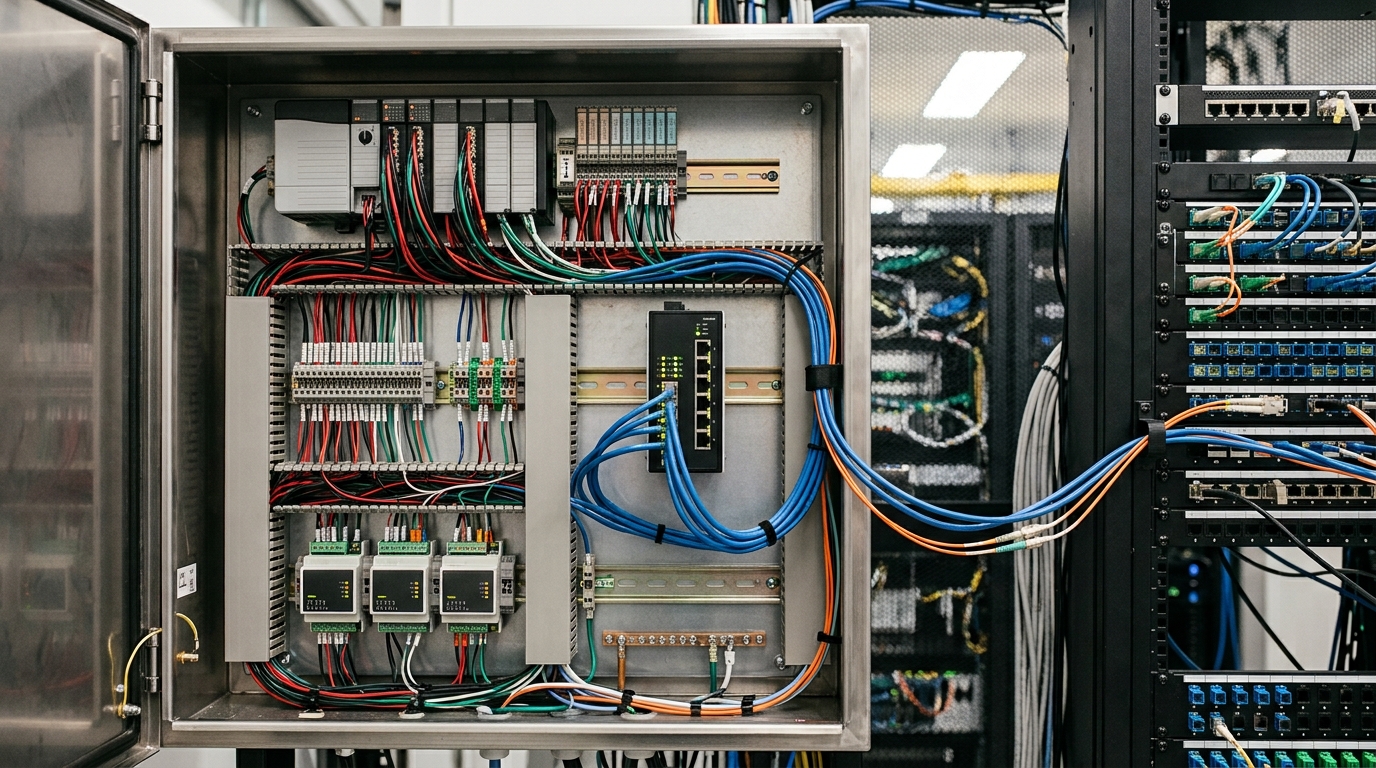
The heart of reporting is the Data Acquisition System (DAS), which acts as the bridge between the analyzer and POMS. Its main duties include:
- Receiving raw signals from the analyzer and converting them into concentrations in engineering units
- Normalizing values, such as correcting readings with an O2 reference as required by law
- Calculating averages on a Time Weighted Average basis for the reporting interval
- Logging and formatting data to match the structure POMS requires
- Managing data status, such as flagging periods when the system is calibrating or under maintenance, for transparency
A good DAS must include data buffering in case the connection fails, so data is not lost and can be re-sent when the system recovers. Without buffering, a brief network outage can create a permanent hole in your records that counts against your data availability. The DAS is also where the audit trail lives: every average, every flagged maintenance window, and every substituted value should be traceable, because regulators may ask how a particular figure was derived. In practice, the DAS is the component that turns a collection of analyzers into a compliant reporting system, and underinvesting in it is a common mistake.
Real-time Transmission and Data Availability
Once the DAS has prepared the data, the system transmits it in real time, or near real time, over a communications network to POMS. What the government values is not just the measured value but data availabilitythe percentage of complete data each day. Data must be complete to at least the required threshold (commonly referenced at no less than 80% of operating hours) to prove the factory genuinely monitors emissions continuously, rather than reporting only when values look good. Maintaining the uptime of both the analyzers and the communications link is therefore as important as accuracy.
Emission Limits and Alerts
Data submitted to POMS is compared against the emission limits set by law for that type of operation. If a measured value exceeds the limit, the system records it as an event requiring explanation. Factories whose DAS is well configured with alerts have an advantage, because the team can detect and address the cause of an exceedance before it becomes a recurring problem.
Penalties for Non-Compliance
Failing to meet reporting requirements has clear legal consequences. Whether it is failing to install the system on time, transmitting incomplete data below the threshold, or repeatedly exceeding emission limits, the outcomes can range from warnings and fines to corrective orders or temporary shutdowns. These costs far exceed the investment in keeping a system reporting completely. Viewing reporting as part of risk management is the right perspective.
Conclusion
CEMS is a system whose success is measured not by accuracy alone, but by the ability to deliver complete, continuous, on-time data to the DIW through POMS. From how the DAS works to real-time transmission and maintaining data availability, ASE Thailand's engineering team helps design and maintain the entire data path to meet requirements. If you are just starting to plan a new system, read our guide to choosing the right CEMS for your plant alongside this article.


