In an era where industries demand the highest level of data granularity and accuracy, Gas Chromatography (GC) has become the heart of Quality Control (QC) and chemical composition analysis. Whether in petrochemicals, oil refineries, or power plants, understanding GC mechanisms and their proper application is essential for engineers and system integration specialists to enhance production efficiency.
Fundamental Principles of Gas Chromatography
Gas Chromatography is a technique used to separate volatile chemical compounds by utilizing the distribution of substances between two phases:
- Mobile Phase (Carrier Gas): A carrier gas that transports the sample through the column. Common inert gases include Helium (He), Nitrogen (N2), or Hydrogen (H2).
- Stationary Phase (Column): The phase fixed inside a small tube. Substances with different affinities move at different speeds, resulting in separation over time, known as Retention Time.
The separation efficiency depends on the columns performance and the precise temperature control of the Column Oven, which must maintain stability down to decimal points.
Key Components and Detection Technology
A high-performance GC system consists of several core components working in harmony:
1. Sample Injection System
The starting point of precision. Modern Process Gas Chromatographs (PGC) use automatic sampling valves to draw samples directly from production lines, significantly reducing human error.
2. Column Technology
The heart of separation. There are two main types: Packed Columns and Capillary Columns. Capillary columns are currently more popular due to their superior resolution and efficiency.
3. Detector
As substances emerge from the column, the detector converts chemical signals into electrical signals. Common industrial detectors include:
- Flame Ionization Detector (FID): Best for hydrocarbons; offers high sensitivity and a wide linear response.
- Thermal Conductivity Detector (TCD): A universal detector ideal for analyzing permanent gases.
- Electron Capture Detector (ECD): Extremely sensitive to halogenated compounds; used primarily in environmental monitoring.
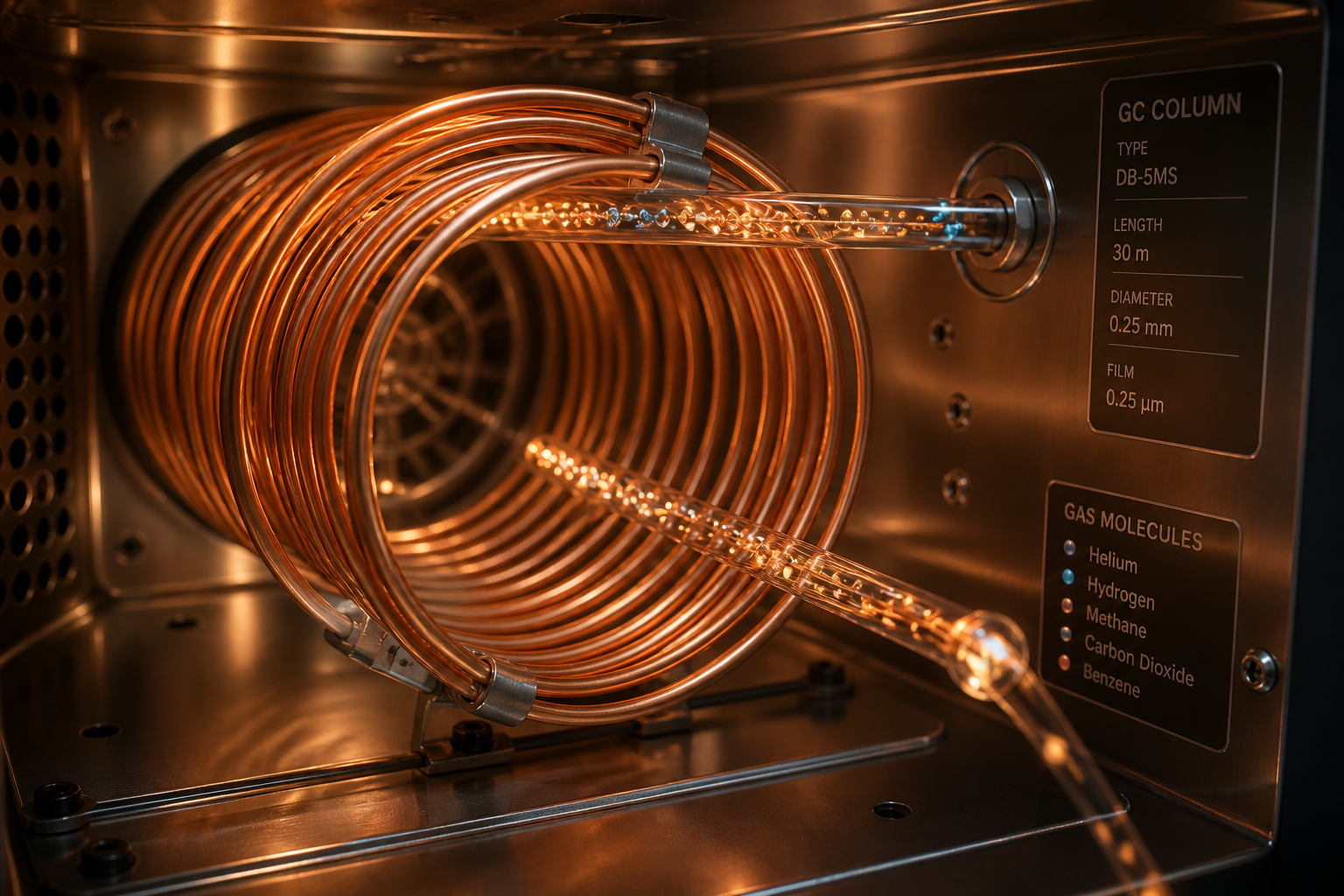
From Lab to Line: Process Gas Chromatograph (PGC)
For an Automation Engineer, PGCs are engineered for ruggedness and 24/7 industrial operation with key features:
- Real-time Monitoring: Provides immediate analytical results for instantaneous process adjustments.
- System Integration: Transmits data via Modbus, OPC, or 4-20 mA to a DCS or PLC for Closed-loop Control.
- Explosion Proof: Complies with ATEX or IECEx safety standards for installation in hazardous areas.
Industrial Applications
- Petrochemicals & Refineries: Natural Gas Composition analysis, Calorific Value measurement, and product purity checks.
- Power Industry: Dissolved Gas Analysis (DGA) in transformer oil to assess asset health.
- Environmental Management: Continuous Emission Monitoring Systems (CEMS) and VOCs measurement.
Conclusion
Gas Chromatography is a vital mechanism in industrial automation. For plants aiming to transition into a Smart Factory, investing in a high-quality GC system integrated with expert technical support is a sustainable and valuable move.


