In today's highly competitive industrial landscape, particularly within the petrochemical sector, oil refineries, and large-scale power plants, precision in Process Control represents the pinnacle of engineering success. Maintaining product quality standards (QA/QC) and controlling emissions to comply with environmental regulations all rely on accurate and timely deep-level data. The devices that act as the eyes and brains of the plant, measuring these chemical and physical properties, are Analyzers. However, maximizing the effectiveness of these high-performance instruments requires the expertise of a System Integrator to flawlessly integrate the entire system.
The Importance of Analyzers in Industrial Production Processes
Analyzers, or industrial analytical instruments, are devices designed to measure the composition of gases, liquids, or specific properties in a continuous production line (Continuous Monitoring). Common examples include Gas Analyzers, Liquid Analyzers, and Continuous Emission Monitoring Systems (CEMS) for exhaust stacks.
The data obtained from an Analyzer is used to adjust the proportion of raw materials and control temperature and pressure in chemical reactions to achieve the highest purity of output while reducing the waste rate (Waste Reduction). Even a slight deviation at this point can lead to massive economic losses or even endanger the plant's structural integrity. Therefore, choosing instruments that provide high Precision and Accuracy is an uncompromising engineering mandate.
Why Leading Plants Must Rely on System Integrators?
Purchasing the world's best Analyzer alone cannot guarantee that the system will meet its targets. These devices must be installed in an appropriate environment and communicate flawlessly with the plant's central control system. This is where the System Integrator (SI) plays a crucial role.
A System Integrator is an engineer or specialized organization responsible for designing, assembling, constructing, and testing various subsystems to work together as a single network. Integrating analytical instrumentation systems is highly complex, as it must cover multiple disciplines, including chemical engineering, electrical engineering, Instrumentation engineering, and information technology.
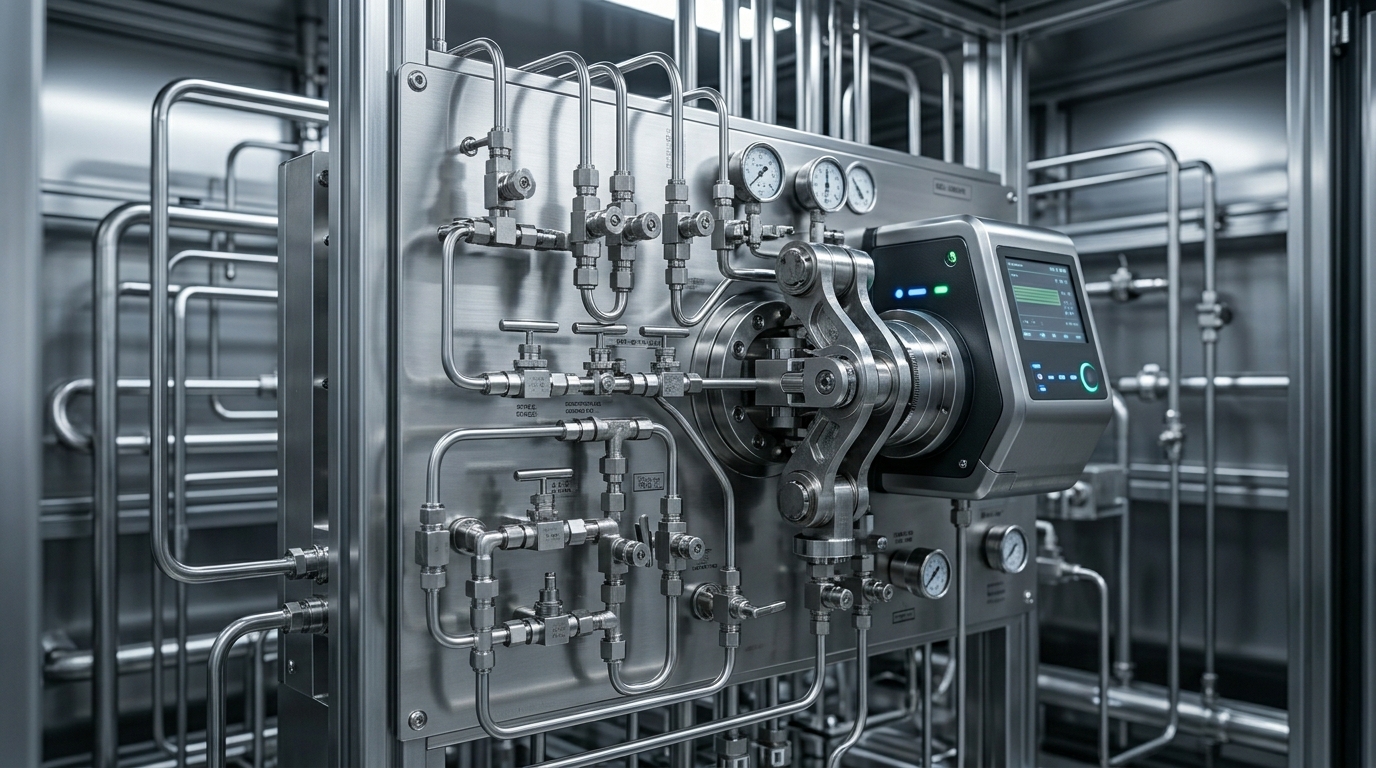
One of the primary challenges a System Integrator must manage is the "Sample Conditioning System" (SCS). Samples drawn from production pipelines often have temperatures, pressures, or particulate matter that are unsuitable for direct entry into the Analyzer's sensor. Designing an SCS to reduce temperature, adjust pressure, and filter impuritieswhile maintaining the integrity of the chemical compositionis an advanced engineering task that dictates the success of the entire analytical system.
The System Integration Process for Maximum Precision
The operations of a professional System Integrator are divided into systematic steps following international standards, which include:
- Front-End Engineering Design (FEED) & Detail Design: Begins with analyzing the Process Requirements, selecting the appropriate analytical technology, and conducting detailed engineering design. This includes creating P&IDs (Piping and Instrumentation Diagrams) and Loop Diagrams.
- System Assembly & Fabrication: Assembling the control cabinets or Analyzer Shelters, which must account for electrical safety standards in Hazardous Area Classifications, HVAC systems, and Calibration Gas systems.
- Factory Acceptance Test (FAT): Testing the operation of the entire system at the manufacturer's facility prior to shipping to confirm that electrical circuits, sample flows, and Analyzer readings comply with all engineering specifications.
- Site Acceptance Test (SAT) & Commissioning: Actual on-site installation of equipment, connecting signal cables to the Distributed Control System (DCS) or Programmable Logic Controller (PLC), and testing the system alongside the plant's Live Process.
Positive Outcomes from Standardized System Deployment
Investing in a properly integrated analytical system yields clear industrial returns. Data from the Analyzer is transmitted via industrial communication protocols (such as Modbus, OPC, PROFINET) to the central control center, allowing engineers to monitor production status in real-time. Responses to anomalies can be made in milliseconds, which helps prevent machinery damage, reduces production line Downtime, and extends the long-term lifespan of the equipment.
Furthermore, regarding legal compliance, continuously recorded and highly reliable data serves as vital evidence confirming that the plant manages its environmental footprint transparently and adheres to the standards set by government regulatory agencies.
Data accuracy is the foundation of Smart Manufacturing. Elevating a plant's potential with advanced analytical technology requires experts who understand both the individual devices and the overall system structure. For organizations seeking to optimize quality control and develop production processes, utilizing comprehensive design and installation services for analytical instrumentation systems will be a crucial mechanism for sustainably merging cutting-edge technology with business success.


