Industrial Gas Sensors: Selection Guide for Safety & Efficiency | ASE
In high-stakes sectors such as petrochemicals, oil & gas refineries, and heavy manufacturing, gas leakage detection is not merely a regulatory compliance issueit is the first line of defense for personnel safety and asset protection. At the core of these safety systems lies a critical component: the Gas Sensor. Acting as the primary transducer, the sensor converts chemical gas concentrations into measurable electrical signals. This article provides an in-depth technical analysis of industrial gas sensors, empowering engineers and procurement managers to make informed decisions for their facilities.
What is a Gas Sensor?
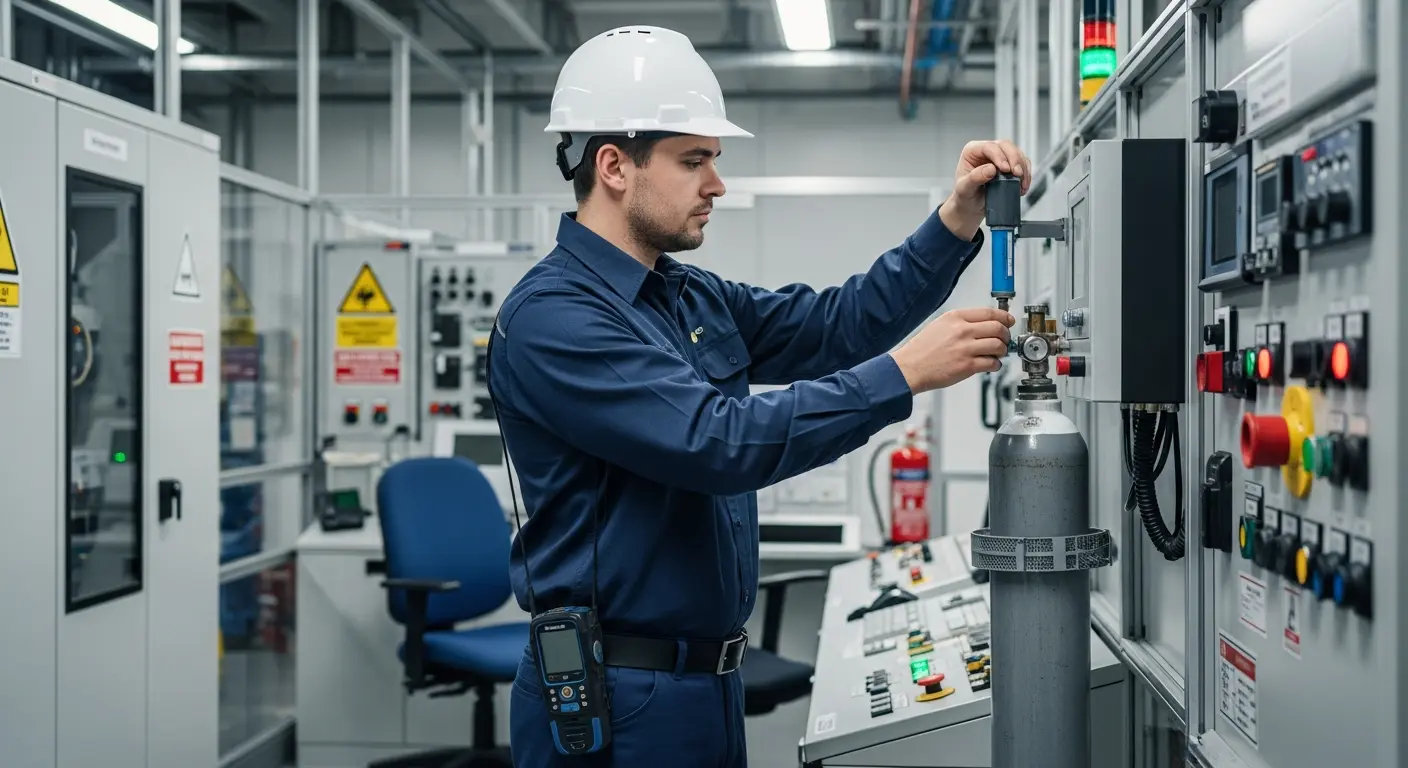
A gas sensor is a transducer device designed to detect the presence and concentration of specific gases within an atmosphere. It operates by converting the physical or chemical interaction between the sensor element and the target gas into an electrical signal (such as milliampere current or resistance change). This signal is then transmitted to a gas detector (transmitter) or a control system to display readings, trigger alarms, or initiate safety shutdowns.
The reliability of any industrial gas detection sensor system hinges on the correct selection of the sensor technology relative to the target gaswhether it be combustible gases, toxic compounds, or oxygen levels.
Working Principles of Gas Sensors
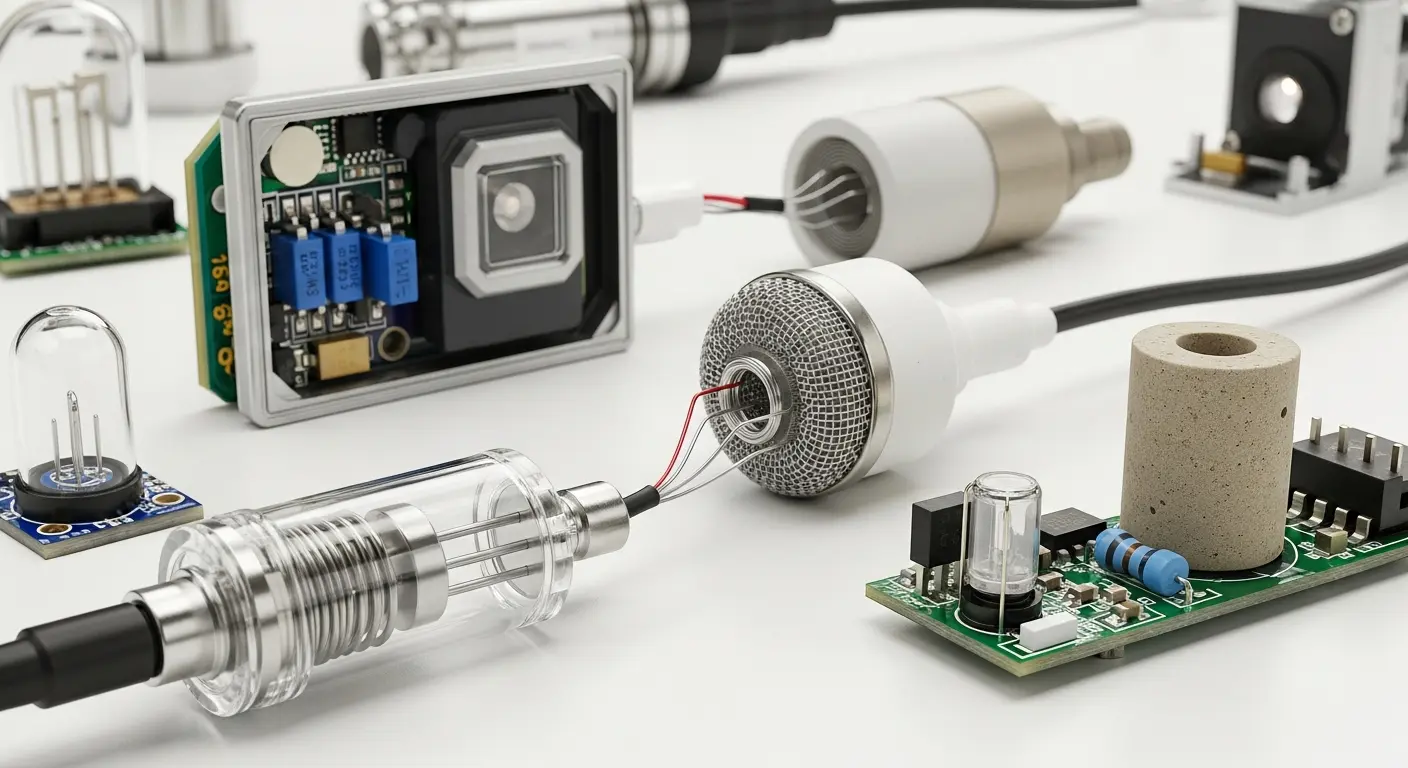
Sensor technology has evolved to address challenges like cross-sensitivity and environmental durability. The most prevalent technologies in industrial applications include:
Electrochemical Sensors
This is the industry standard for detecting toxic gases (e.g., H2S, CO, CL2) and for O2 sensors. The sensor operates via an electrochemical reaction within a cell containing electrodes and an electrolyte. When gas diffuses through a membrane and reaches the working electrode, an oxidation or reduction reaction occurs, generating an electrical current proportional to the gas concentration.
- Advantages: High sensitivity (ppm/ppb levels), low power consumption, linear output.
- Limitations: Finite lifespan (typically 2-3 years), sensitivity to extreme temperature and humidity changes.
Catalytic Bead Sensors (Pellistors)
Widely used for combustible gas detection (0-100% LEL), this sensor consists of two coils (active and reference) coated with a catalyst. When combustible gas contacts the active bead, it oxidizes (burns) at a micro-level, raising the temperature and resistance of the coil. A Wheatstone bridge circuit measures this resistance imbalance.
- Advantages: Cost-effective, robust, detects a wide range of combustible gases.
- Limitations: Requires oxygen to operate; susceptible to "sensor poisoning" from silicones, lead, or sulfur compounds.
Infrared (NDIR) Sensors
Infrared sensors or NDIR (Non-Dispersive Infrared) utilize the light-absorbing properties of gas molecules. Specific gases absorb infrared light at distinct wavelengths (e.g., hydrocarbons at 3.3-3.4 µm). The sensor measures the attenuation of IR light to calculate concentration.
- Advantages: Does not require oxygen (ideal for inert atmospheres), immune to sensor poisoning, long lifespan (>5 years), fail-safe operation.
- Limitations: Higher initial cost than catalytic beads; cannot detect Hydrogen (H2) as H2 does not absorb IR light.
Photoionization Detectors (PID)
PIDs are essential for detecting Volatile Organic Compounds (VOCs) at very low concentrations. A UV lamp ionizes gas molecules, creating a measurable current. This is crucial for monitoring toxicity levels of solvents and fuels.
Types of Gas Sensors by Application
Combustible Gas Sensors
Focused on explosion protection, these sensors measure in %LEL (Lower Explosive Limit). Common targets include Methane (CH4), Propane, and Hydrogen. The choice between Catalytic Bead and Infrared sensors often depends on the potential presence of poisons (silicones) in the environment.
Toxic Gas Sensors
Designed to protect human health, measuring in ppm (Parts Per Million) against occupational exposure limits like TWA (Time Weighted Average). Critical gases include Hydrogen Sulfide (H2S), Carbon Monoxide (CO), and Ammonia (NH3).
Oxygen (O2) Sensors
These sensors serve a dual purpose: monitoring for Oxygen Deficiency (risk of asphyxiation in confined spaces) and Oxygen Enrichment (increased flammability risk).
How to Select the Right Gas Sensor
Selecting the appropriate gas detection sensor requires a thorough evaluation of engineering parameters:
Target Gas Specificity
Identify the gas composition. If detecting general hydrocarbons, catalytic beads may suffice. However, if high specificity is required to avoid false alarms from interfering gases, electrochemical or IR technology might be superior.
Environmental Conditions
- Temperature & Humidity: Electrochemical sensors may dry out or leak in extreme conditions.
- Interference: Presence of silicone vapors, halogenated hydrocarbons, or heavy metals dictates the use of IR sensors over catalytic beads to prevent poisoning.
- Dust & Particulates: Harsh environments may require specialized sintering or filters.
Standards and Certification (ATEX, IECEx)
For installation in hazardous locations (Zone 1 or Zone 2), the sensor and detector assembly must carry ATEX or IECEx certifications. This ensures the device is Intrinsically Safe or Explosion-Proof, preventing it from becoming an ignition source.
Maintenance and Calibration
Sensor performance naturally drifts over time. Regular calibration (Zero and Span) is mandatorytypically every 3 to 6 monthsto maintain accuracy. Furthermore, a bump test should be performed before daily use, especially for portable units, to verify that the sensor responds to gas and alarms function correctly.
Conclusion: The Value of Quality Gas Sensors
Investing in high-quality gas sensors and detection systems is not just an operational cost; it is an investment in continuity and safety. Reliable sensors reduce false alarms, minimize downtime, and ensure compliance with strict safety regulations. ASE (Analytical Systems Engineering) specializes in providing top-tier industrial instrumentation tailored to the rigorous demands of the Thai and international markets.


